Nightmare in Columbia County aka Victim of Beauty True Story

The movie Nightmare in Columbia County aka Victim of Beauty is based on the case of Sharon Faye Smith of Columbia, South Carolina.
Left Behind


By Becky Beane
Survivers of Capital Crimes Don't Want the Victims to be Forgotten


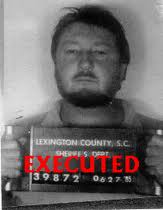
Prison Fellowship - When the state of South Carolina executed convicted murderer Larry Gene Bell in 1996, Hilda and Bob Smith sat alone in their living room watching the news on TV.

"We prayed for him," Bob says of the man who had abducted and killed their teenage daughter 11 years earlier. "And I felt sympathy for his parents, because he was their child. But there was no closure when they executed him. It couldn’t bring Shari back."

What touched the Smiths as they watched the news coverage was the sight of their daughter’s friends gathered outside the prison gates. Not protesting for or against the death penalty, but simply holding lighted candles in Shari’s memory.

"That meant so much to us," Hilda says softly. "We just want Shari to be remembered, you know?"

Vanished
Bob brings out Shari’s senior picture, taken just months before the high-schooler’s premature death at 17—and locking into memory forever the laughing eyes and radiant smile that so perfectly reflected her chipper, lively spirit.

"She was voted the ‘wittiest’ in her senior class," says Hilda. Also the "most talented," adds Bob. "She had a gorgeous voice."

Hilda adds her own superlative to the mix: "a most loving child."

A break in Shari’s loving routine is what tipped Bob off that something might be wrong on that last day of May in 1985. In his home office on the rural outskirts of Columbia, South Carolina, Bob glanced briefly out the window and noticed Shari just pulling up to their 750-foot tree-lined driveway. A few minutes later he realized she hadn’t come in yet. "She always came and gave her Daddy a big hug," Bob explains. "She was the most affectionate little thing in the world!"

He looked out the window again to see her car still by the roadside mailbox: motor running, driver’s door open . . . and Shari nowhere in sight. "At first I thought she had just run across the street into the woods," recalls Bob, because Shari — with a rare form of diabetes — sometimes downed large amounts of water and then quickly had to find relief.

But when he went up to look for her and couldn’t find her, Bob trembled with dread.

Forty-two minutes later, police officers sat in the Smith’s living room, suggesting that Shari — like so many other vanished teens — had simply run away from home. But her parents dismissed that notion at once. "I’m her Mama," Hilda insisted. "I know my child!"

And so a parent’s worst nightmare began in a community where they had expected to "bring up the children in fresh air and safety." What should have been a festive high-school graduation party turned into a grim search party, pulling in hundreds of volunteers and local, state, and federal law enforcement. The kidnapper called the terrified Smiths several times — never asking for ransom, just coldly teasing with details about Shari’s clothing to prove he really had her. Then came Shari’s letter, a handwritten "last will and testament" filled with love and courage. "I’ll be with my Father now," she consoled her family. "Please do not become hard or upset. Everything works out for the good for those that love the Lord."

Romans 8:28 — the same verse Bob and Hilda immediately claimed when they realized Shari was missing. But on June 5 they received the call that gave directions to a spot 16 miles away, where the killer had left her body. And they admit they challenged God’s goodness.

Losing Control
Shari’s abduction hurtled the Smiths into an unplumbed well of loss — not just the horrible helplessness. "For the first time in my life as the father and protector of my household, I was not in charge of my home," says Bob. For 28 days — from Shari’s disappearance until Bell’s capture — police officers and FBI agents took over the Smiths’ house and yard: coordinating the manhunt, tapping phone calls, escorting Hilda to the grocery store or son Robert to a basketball game.

"The police were great," Bob stresses. Still, he adds, "for 28 days we lived in fear."

Bell’s ripping out a part of their family left a searing wound in Hilda’s soul. "I prayed to die," she confesses. "The pain was so bad, I just couldn’t live with it. I pleaded with the Lord, ‘I know I’m going to be with You, so please, please, please let me die!’ " But it was forgiveness, not death, that opened the blocked portals to healing. After Bell was arrested, officers brought in Hilda and older daughter Dawn to confront him — hoping to elicit a spontaneous confession. "I prayed about going," recalls Hilda. "Inside I was screaming as hard as I could, trying to get the pain out, the pain of losing my daughter. And I said, ‘God, I can’t hate this man; there’s no more room in my heart for more pain!’ And God took the hate away."

When Hilda met Bell at the jail, "she forgave him to his face," says Bob, still amazed at his wife’s strength and mercy. It took Bob another seven months to reach his own point of forgiveness. At the urging of a friend, he went behind a secluded barn "and just blasted out," he describes. "I was really, really mad, and I wanted to scream and holler at God. My friend said, ‘Go ahead. He can take it.’ And it was such a relief to do that physical thing and get all those emotions out." Once he let them out, he was able to let them go.

Bob’s forgiveness of Bell dovetailed with his forgiveness of himself. "I was supposed to take care of my children, and in my mind I had failed," he explains. "Maybe I needed to forgive myself before I could forgive him. It happened almost at the same time."
But forgiveness didn’t instantly abolish the pain — particularly when recurring media coverage and court proceedings forced Bob and Hilda to relive the events and exposed discrepancies in treatment. "The trial is a cruel, cruel thing to the victims, because the criminal has all the rights," Bob accuses. Because of excessive publicity in Columbia, the trial took place 100 miles away in Moncks Corner, where the Smiths had to spend two weeks in an "awful" motel room detached from familiar surroundings and supportive friends.

During Bob’s testimony, the judge and defense attorney often curtly cut him off in mid-answer. "They reprimanded me: ‘You can’t say that!’ And I’m thinking, But what did I do? I’d just lost my daughter, and I felt like I was on trial! I couldn’t tell the whole truth as I knew it." Again, he felt helpless — "like I was a nobody." After the jury convicted Bell, "we were rushed out to the police car, and I just cried and cried," Hilda remembers. "They said it was all over, but Shari wasn’t coming back. And I still wanted Shari back."

Through 11 years of appeals and since the execution, the Smiths have resisted efforts to get them involved in either championing or opposing the death penalty. "I won’t give an opinion," Bob says emphatically — "other than to say that it doesn’t bring closure" — something victims often long for and death-penalty proponents often promise.

What the whole tragedy has brought them is compassion for and connection with other victims of violence, particularly parents who have lost children. A few years after Shari’s much-publicized homicide, Bob — who serves as chaplain for the local sheriff’s department — accompanied officers to notify another couple about their daughter’s murder.

Distressed by the news, the parents wanted nothing to do with the messengers — until Bob reintroduced himself, not as a chaplain but as "Shari Smith’s daddy." Instantly the other father wrapped his brawny arms around the one man in the room who could truly understand the agony he was feeling. "He crushed me like a bear," recalls Bob, tears clouding his eyes. "The mother did also. God had me there for that reason; there was an immediate bond." Hilda, too, has responded to the need to minister to grieving families. "It’s a tough assignment," she admits, "but it’s one I can’t say no to, because I have been there." Unaccustomed to the limelight, Hilda has accepted several invitations to speak to women’s groups and church audiences about her spiritual journey. She is currently writing a book called The Rose of Shari.

The Smiths also serve on the advisory board of the South Carolina chapter of Neighbors Who Care (NWC), Prison Fellowship’s ministry to crime victims. "When this happened to us, we had neighbors who cared," says Hilda. "But there are so many people who don’t have a church family. And we need this organization to give them the support and help they need."


Singer overcame family tragedy

Web posted Jul. 21 at 01:18 AM


By Pat Willis
South Carolina Bureau

AIKEN -- Dawn Smith Jordan and her family lived through a nightmare, but the wife and mother of two small children did more than just survive the tragic death of her sister.

She overcame.

Mrs. Jordan took that indomitable spirit and her concert ministry to Millbrook Baptist Church on Sunday for the dedication of the church's newly renovated sanctuary. A popular contemporary Christian singer/songwriter, Mrs. Jordan preached a sermon of triumph over tragedy through her songs and comments during a special program at the church.

Her story, told in everyday language and lyrics, is about being a Christian in ordinary life occurrences such as grocery shopping and putting the children to bed. But it is also about enduring extraordinary pain and suffering, and keeping her faith through it.

In the summer of 1985, Mrs. Jordan's sister Shari Faye Smith was kidnapped from the Smith family home near Columbia and brutally slain. Larry Gene Bell was captured, tried and executed for the crime, but not until he had put the family through an excruciating ordeal.

During that time, which Mrs. Jordan calls ``the impossible days in 1985,'' Mr. Bell made numerous telephone calls to her family in which he graphically described Ms. Smith's death. He also made the 17-year-old girl write her last will and testament in a letter to her family.

That letter was how they caught him.

He had left the imprint of a phone number on the will, and the number led the police to Mr. Bell. It was also through the letter that Mrs. Jordan began the long road back to healing.

At the end of the letter, Ms. Smith quoted a Bible verse her father had posted on the bathroom mirror: ``Everything works out for the good for those who love the Lord.''

Mrs. Jordan went on to become Miss South Carolina in 1986 and second runner-up to Miss America. Since 1987, she has performed concerts throughout the United States and Canada. In 1988, she recorded Sister, a song written for Ms. Smith.

Still the story does not end there.

Before he was electrocuted in 1989, Mr. Bell wrote to Mrs. Jordan asking for forgiveness. Although she understood that ``true healing can't take place without forgiveness,'' she is certain that did not come until much later.

In the same year, she began writing her autobiography, Grace So Amazing, a portion of which appeared in Reader's Digest, and she believes that was when the process of forgiving, and thus healing, really began. Her autobiography was published by Crossways Books, and her family's story was told in a 1991 CBS movie called Nightmare in Columbia County, which may still be seen in reruns on cable stations.

She said she truly forgave Mr. Bell when she realized it was not she but God working through her who has the power to forgive.

``Forgiveness is nothing short of the supernatural of the holy God to extend mercy to someone we think does not deserve it,'' she said.

Frequently on contemporary charts, she has recorded six albums. The latest two, How Far and Canopy, were released by Urgent Records.


Tidbits

* Shari was taken after she had returned home from a pool party. She was checking the mail box. This was a rural area so the box was a good distance away from the house. It was Shari's father who noticed the car doors opened and realized that she was missing, instead of her sister as depicted in the movie.

*Larry Bell had a reputation for being very loud and annoying even in prison. But when it was time to be put to death, he did so without making a final statement, he kept his eyes closed as he was executed in South Carolina's electric chair. He grasped the wooden armrests, looking resigned and weak before the first surge of electricity jolted his body.